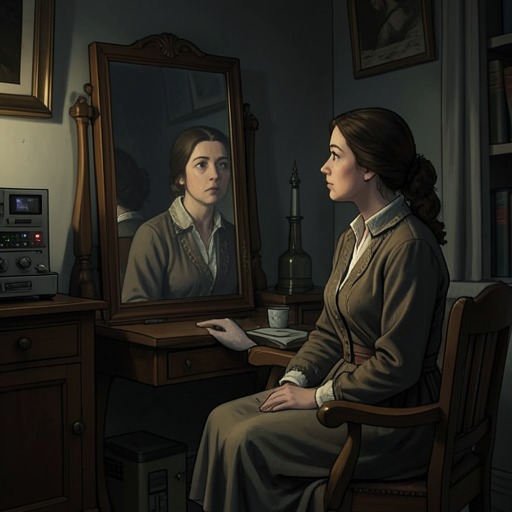
Motherhood and the Desire to Have Children
The GodmotherMotherhood and the Desire to Have Children is presented not as a settled answer to what makes a life complete, but as a desire that gathers force amid uncertainty, unequal care work, and the limits of personal control. Rachel Elliot, who has built her identity around professional success and independence, comes to want a child intensely; Anita Cavanagh’s account of motherhood makes its daily demands vivid, while Naomi Fullerton’s circumstances expose the longer-term economic risks. The desire is deeply personal, but the choices around it are shaped by relationships, work, health, and who is expected to do the caring.
Desire and its turning point
Rachel Elliot’s decision first appears in her diary as a stark declaration: she has decided to have a child. Even committing the thought to the page has been difficult. She delays writing it down, wary of making an enormous decision concrete, and tries to find a hurried moment before Anita Cavanagh arrives. The diary becomes a place where Rachel must make her thinking lucid, as if the decision needs to be examined before it can be spoken aloud.
The wish does not remain abstract. Rachel makes a medical appointment despite her deep discomfort with doctors and medical procedures. She associates that fear partly with a serious bout of double pneumonia when she was five, though she believes it runs deeper. To her, medical ignorance means vulnerability: without understanding what is happening, a person loses the ability to judge and choose. Dr Abbot’s friendly manner and offer of tea make the consultation less intimidating than Rachel expected. The initial questions are straightforward, covering her regular periods, mid-cycle discharge, medication, smoking, and diet. The scene establishes that wanting a child also means entering systems of bodily knowledge that Rachel finds disempowering, even when the encounter itself proves manageable.
Her wish takes a more complicated shape when she asks Nathan Kramer to help her conceive. In a bath, with champagne glasses nearby, she struggles to make the request and then states it plainly: she wants a child as soon as possible and is asking him to provide the means. Rachel insists that she wants to raise the child alone, promises there would be no later demand for money or parental commitment, and offers to put the arrangement in writing. The proposal makes her determination unmistakable, but also shows how she tries to contain the consequences through advance planning. Nathan initially mistakes the request for news that she is already pregnant. Rachel corrects him: she is asking for the act itself, not a shared future as parents.
The lived cost of care
Anita Cavanagh’s experience supplies a counterweight to Rachel’s imagined future. While trying to write a feature about London leisure centres, Anita faces the twins painting not only their paper but the kitchen walls, then each other. Nursery school is still four months away, and the prospect of five mornings to herself feels like a release. Her domestic circumstances are not a passing inconvenience; they occupy the hours and attention from which paid work must be carved out.
Motherhood also follows Anita’s career choices and her marriage. Her ambitions as a journalist gave way repeatedly to the needs of Giles Cavanagh’s career, first through infatuation and later through fear that he would leave her. Work dwindled as she chose accompanying him abroad over regular London opportunities. After Charlotte was born, four months of colic and the routine of feeding and broken nights intensified Anita’s sense of confinement, particularly as Giles could continue flying to reporting assignments. She chose to have a second child because she had suffered as an only child herself; the news that she was expecting twins was a shock. Giles arranged a period of home-based work, which brought him into the work of caring for infants, but it did not resolve the resentment between them. Mortgage payments on their dilapidated Camden maisonette left little room for support such as a nanny or a second car. Against this history, Anita’s warning to Rachel is informed by actual exhaustion: she describes the pull between wanting to work or escape and feeling compelled to remain with the children, a conflict that a nanny cannot simply remove.
Rachel’s later reflections show that she hears the question in more than bodily or romantic terms. On the drive toward Robbie Dexter, she recognizes that motherhood promises fulfilment beyond her career, giving her emotions and hopes another focus. She also sees that her fixation on whether to stay at McKenzie Cartwright has come to crowd out any other imagined future. Wanting to open more avenues in her life feels healthy to her, even as a secret hope involving Robbie accompanies the visit. The desire may be powerful, but it is not presented as a single, uncomplicated motive.
Relationships, secrecy, and possibility
After a difficult stretch of self-doubt, Rachel Elliot briefly dismisses the prospect of a baby as a whim. Returning from the Bermuda shoot, she finds her cat waiting beside the garden door. She throws down her bags and gathers it up, pleased to be welcomed home; the animal’s stiff response and hesitation before entering make the moment an understated contrast to her longing for attachment. When Anita asks whether she is still interested in having a baby, Rachel laughs it off and points to the cat. The retreat is not proof that the desire has passed: on the drive to a Christmas event, Rachel thinks she has fallen out of love with herself and cannot imagine wanting to be herself again unless something fundamental changes, like having a baby. The thought has become an exhausting cycle she cannot control.
Robbie Dexter intensifies the possibility. Rachel imagines him as a father and finds an alluring symmetry in the idea of their lives coming full circle. During their reunion, they make love without contraception. Robbie assumes Rachel is taking the pill, as she had previously; Rachel has her contraceptive cap with her but, after wrestling privately with her conscience, puts it away unused. She reasons that at nearly forty every cycle counts, that her confidence in a future with Robbie is growing, and that she could cope alone if that future were taken from her. She hides the cap beneath cotton wool in her vanity case. Yet her resolve does not erase the deceit: at moments during their intimacy she feels like an actor and wonders whether Robbie senses that she is withholding something. The scene makes the difference between choosing motherhood and honestly negotiating that choice with a partner impossible to ignore.
Work, dependence, and reproductive limits
The professional world gives Rachel examples of the costs of treating work and family as incompatible priorities. Remembering an account director who once arrived late because his infant daughter had smiled for the first time, Rachel recognizes the courage it took for him to bring a father’s joy into a boardroom. She had once scorned what she saw as sentimentality; now she feels ashamed of that judgment. She also believes the women with children at McKenzie Cartwright would not risk making a comparable admission, for fear of how colleagues would judge them. The contrast suggests that parenthood is not only a private arrangement: workplace expectations affect whose caring responsibilities can be acknowledged without professional penalty.
Naomi Fullerton’s account makes the material stakes sharper. After fifteen years of marriage and four children, Graham wants a divorce and has been having an affair for two years. Naomi had given up a good degree and a job in media planning to help build the life he wanted. Though she loves her children, she describes their care as a burden that leaves her financially dependent on a man she can no longer love. With her youngest, Helen, still years from university, she estimates that dependence could last eighteen years. Naomi has left Suffolk for London rather than stay near Graham and the woman he has moved in with. Her circumstances do not invalidate the love she feels for her children; they reveal how care, lost earning power, and a partner’s choices can narrow a mother’s options long after the initial decision to have children.
The prospect of conception is also subject to biology beyond Rachel’s plans. While injured and confined at Robbie’s home, she reads a fertility article asking why conception has become more difficult and noting the growth in couples seeking treatment. Later, Will Raphael tells her that he cannot have children: he has congenital absence of the vas deferens, discovered when he was with Ginnie. The disclosure clarifies why he had been resisting Rachel, and it changes what their growing attraction can mean in relation to her maternal hopes. Together, the medical article and Will’s revelation place private longing beside reproductive limits without offering a guaranteed solution.
Significance
The theme’s force comes from the contrast between Rachel’s effort to plan motherhood and the realities that resist neat control. She approaches the decision as an independent woman with money, a career, and the intention to parent alone; she also fears medical authority, tries to specify a donor’s obligations, and secretly changes her contraception during a reunion. Anita’s exhaustion and Naomi’s financial dependence show that the work and consequences of raising children cannot be contained by intention alone. By bringing these experiences into contact, the novel treats maternal desire as real and consequential without making it either a cure for dissatisfaction or a simple route to fulfilment. Rachel’s longing opens a new possible future, but the evidence leaves its outcome unsettled.